
Canine-Assisted Therapy
Some of the best listeners at Riverway have four legs.
Dogs have a way of settling a room, opening a conversation and offering comfort that doesn't need words.
At Riverway Therapy, canine-assisted sessions can be built into therapy for children, teens and adults. We usually work with one canine helper at a time, most often Kali, who joins in-office sessions in North Bay.
Canine-assisted therapy is also the focus of Sue McDermid's research. Sue is a Registered Social Worker/Psychotherapist and the owner of Riverway Therapy, and her Master of Social Work research at Wilfrid Laurier University explored exactly this question: ‘What happens when trained dogs become part of clinical practice with young people?’

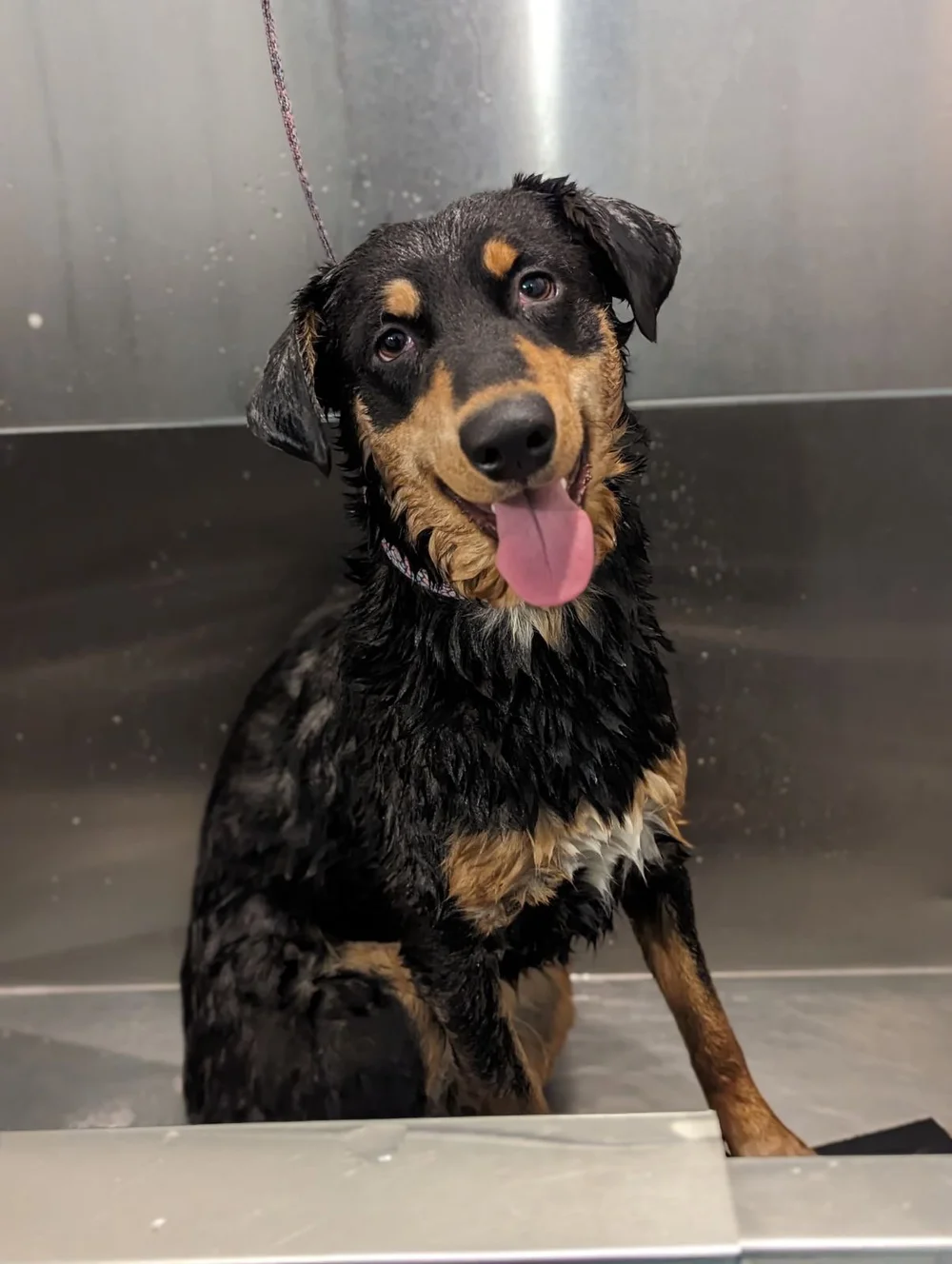
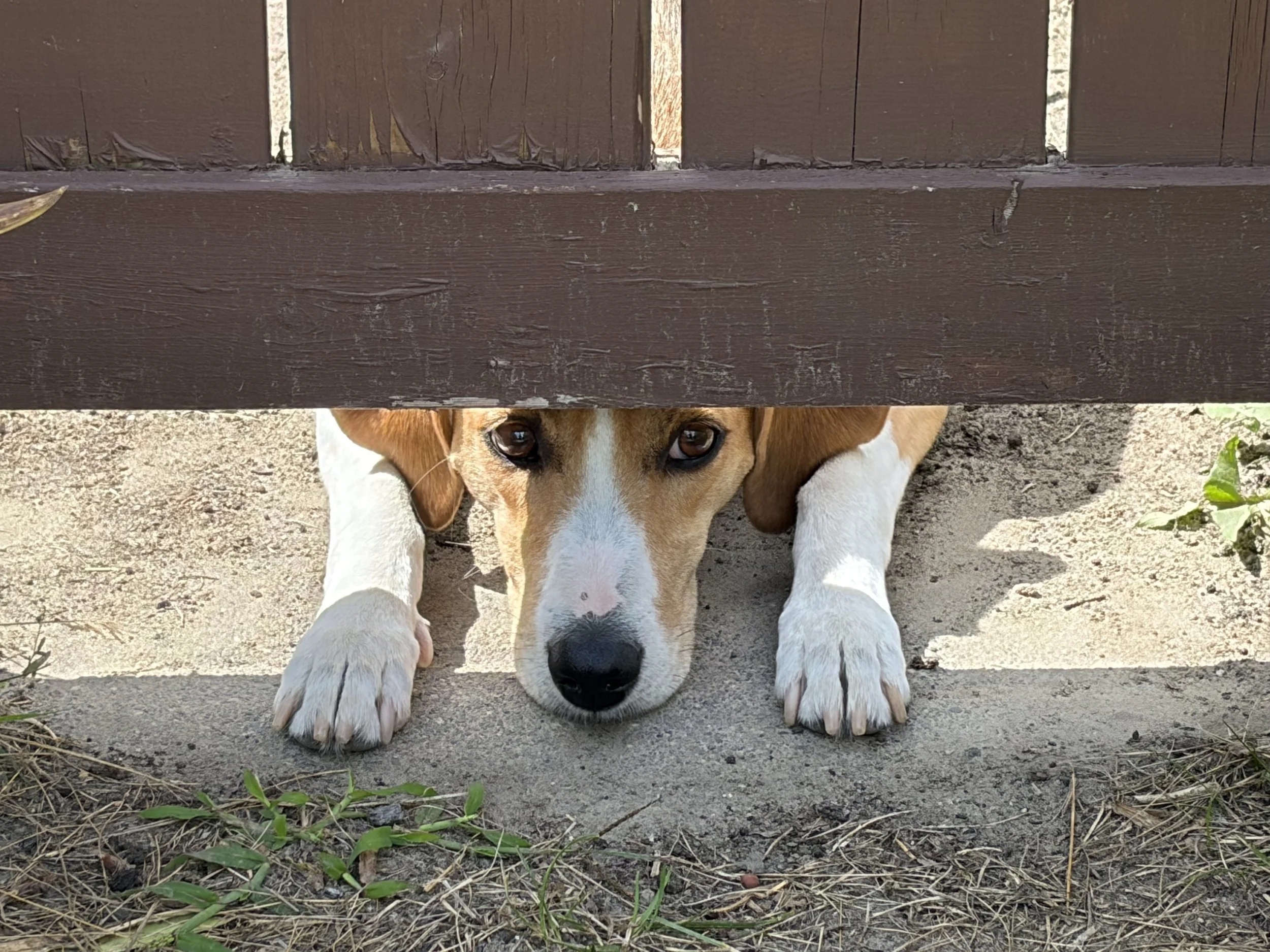
Kali, one of Riverway's Therapy Dogs.
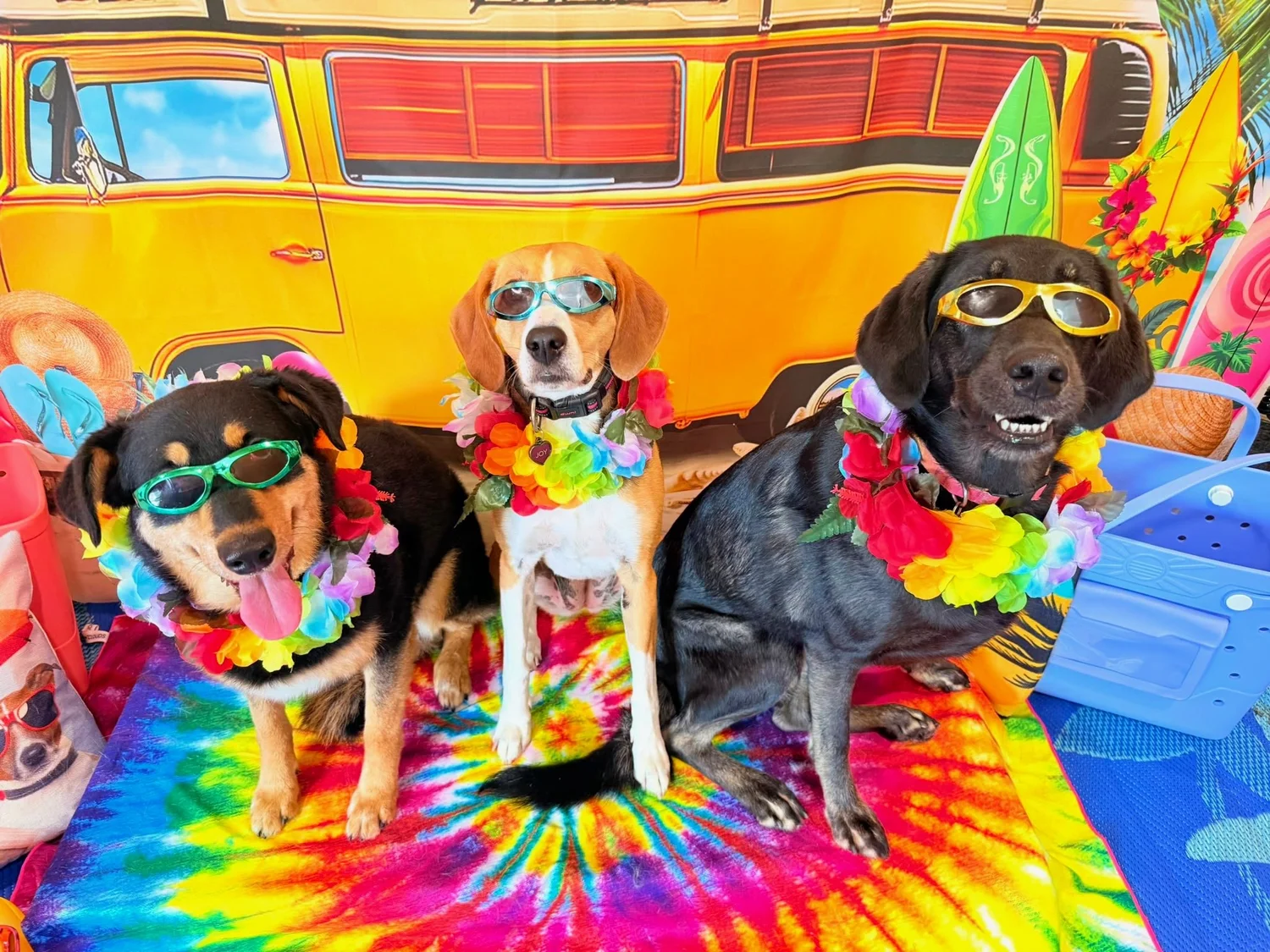
Maya, Joy & Kali, Riverway's Canine Helpers
What it is
Therapy first. The dog is the bridge.
Canine-assisted therapy is not "playing with a dog." It is counselling, led by a registered clinician, in which a canine helper is intentionally part of the work: helping someone feel safe enough to talk, offering comfort during hard moments, and giving the therapist another way to notice what a person is feeling.
Therapy dog
Works alongside a handler to support many different people, in sessions or groups. This is the role Sue's dogs play at Riverway as a canine helper in therapy sessions.
Facility dog
A trained, accredited dog partnered with a professional inside an organization such as a school board. Sue's research studied social workers partnering with facility dogs. (Kali is currently working with a trainer and our goal is to fully certify her as a trauma facility dog.)
Service dog
Trained to support one individual with a specific need, such as a medical or psychiatric condition. Different role, different training, and not what this page is about.
From Sue's research
What is it about Coda and Will?
For her Master of Social Work at Wilfrid Laurier University, Sue interviewed school social workers who partner with accredited facility dogs in an Ontario school board. Her findings describe three things that make canine-assisted therapy work. [1]
Connection
Clients moved through the trust and engagement stage faster, and the safe, welcome touch of a dog offered comfort in moments when talking wasn't possible.
Attunement
Dogs noticed shifts in a young person's emotional state that adults missed, and responded, giving the clinician information no words had conveyed.
The handler–dog relationship
A trained handler who reads their dog, and a dog who trusts their handler, is what turns a friendly animal into a therapeutic partner.
What the research shows
The effects of human–animal interaction
Known benefits, backed by evidence.
Decades of research on human–animal interactions point to the same handful of effects. Numbered references are listed at the bottom of the page.
Tap a heading to open it.
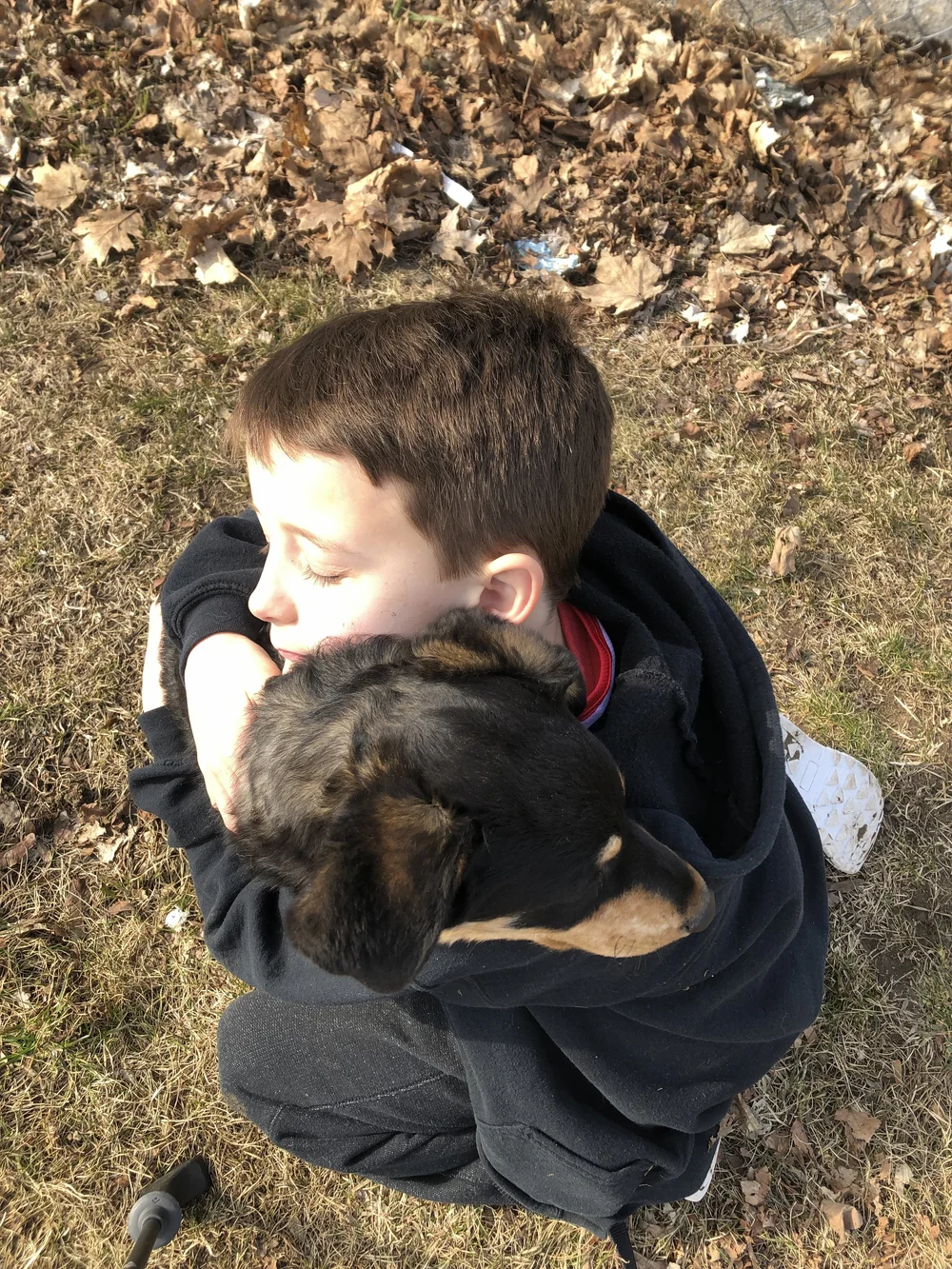
Trust builds faster
Since Boris Levinson first documented it in the 1960s, studies have repeatedly found that a dog in the room helps clients build rapport and trust with the therapist more quickly, which is where every good outcome starts. [1, 2]
The body calms down
Petting or simply making eye contact with a dog raises oxytocin, the "feel-good" bonding hormone, and lowers blood pressure and cortisol. Odendaal's work found these changes begin within minutes of contact, in both the person and the dog. [3, 4]
Big feelings get easier to manage
Research in residential and school settings shows children and teens de-escalate more readily and practise self-regulation more successfully with a dog present. Matching your breathing to a calm dog's is a real technique, and it works. [5, 1]
A way in when words are hard
Traumatic memories are often hard to put into words. Clinicians working with trauma survivors report that a dog offers a non-verbal path to comfort, reduced isolation, brighter mood and lower anxiety, alongside benefits such as improved sleep and a greater sense of calm. [5, 6, 7]
Connection and belonging
Sue's own research found that dogs help isolated young people connect with peers and trusted adults, and that a shared love of a dog can turn a lonely student into part of a community. Adolescents with pets also report less loneliness. [1, 8]
Support across many needs
Systematic reviews of canine-assisted therapy with adolescents and of canine-assisted therapy for anxiety in children find consistent, if still developing, evidence of reduced distress and improved communication and social skills, including for autistic young people. [9, 10]
Research is ongoing as demand for animal-assisted therapies continues to grow. Canine-assisted therapy works best as part of good clinical care, not as a replacement for it. That is exactly how it is used at Riverway.
The canine team
Three sisters, three very different personalities.
Whether a dog joins a session, and which one, depends on the client, the goals of the work and the therapeutic goal. We will always talk it through with you first.


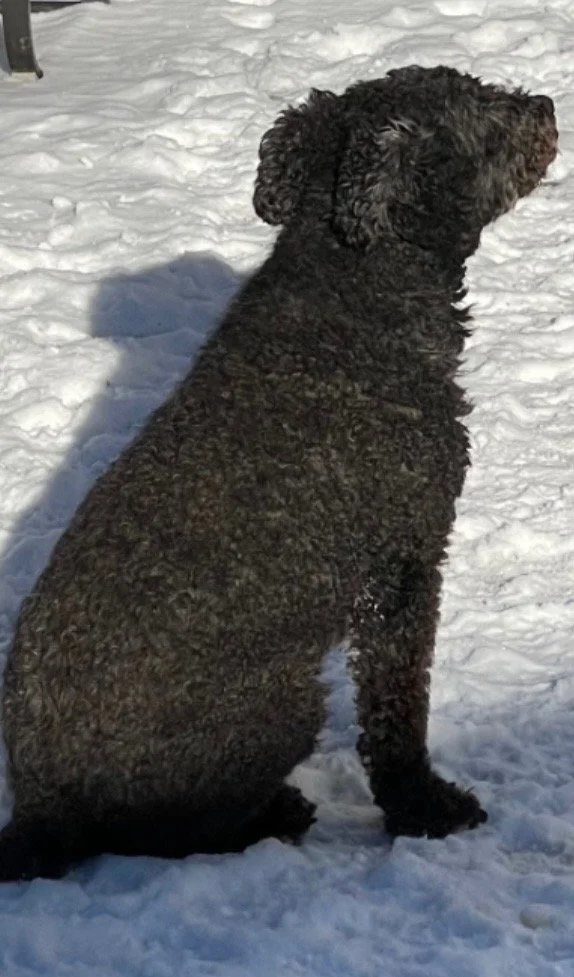
Remembering Timber
In loving memory
Riverway's first canine helper during Covid and dog buddy to many of Sue's foster kids. Timber was blind but you wouldn't know it. He loved his time at Riverway and though he is no longer with us, he was one of Sue's best teachers.

How it works at Riverway Therapy
Always a choice, never a requirement.
You decide. A dog is only part of a session if you (or your child) want one there. Some people love it; some prefer not to, and that is completely fine.
Two ways to work together. In-office sessions at Riverway Therapy in North Bay, and virtual sessions where a dog may pop in to say hello.
Allergies and fears are respected. Tell us up front, and sessions may be planned without a dog present.
The dogs' well being matters too. They can step away whenever they need to, and we will step in to separate a canine from a session if needed to keep everyone safe, dogs included.
Demand is high. Canine-assisted sessions are offered on an individual basis and can't be guaranteed for every client or every appointment, but we'll do our best to accommodate all requests.
Curious whether it's a fit?
Just ask. The dogs are hoping you will.
Sessions in North Bay and online across Ontario, with evening and Saturday times available. Reach out and we'll talk about what would help.
References
- McDermid, S. (2020). What is it about Coda and Will? Exploring the experiences of school social workers using canine-assisted therapy in their clinical practice with students (Master's thesis). Wilfrid Laurier University. scholars.wlu.ca/etd/2265
- Mallon, G. P. (1994), on the work of Boris Levinson; and Soban, C. (2008), on client experiences of canine-assisted therapy — as reviewed in McDermid (2020).
- Odendaal, J. S. J. (2000). Animal-assisted therapy: Magic or medicine? Journal of Psychosomatic Research, 49(4), 275–280.
- Finn-Stevenson, M. (2016), on oxytocin release in both people and dogs — as reviewed in McDermid (2020).
- Geist, T. S. (2011). Conceptual framework for animal-assisted therapy. Child and Adolescent Social Work Journal, 28(3), 243–256.
- Mims, D., & Waddell, R. (2016). Animal-assisted therapy and trauma survivors. Journal of Evidence-Informed Social Work, 13(5), 452–457.
- Tedeschi, P., et al. (2015), on animal-assisted interventions for trauma and PTSD — in A. H. Fine (Ed.), Handbook on Animal-Assisted Therapy (4th ed.), as reviewed in McDermid (2020).
- Black, K. (2012). The relationship between companion animals and loneliness among rural adolescents. Journal of Pediatric Nursing, 27(2), 103–112.
- Jones, M. G., Rice, S. M., & Cotton, S. M. (2019). Incorporating animal-assisted therapy in mental health treatments for adolescents: A systematic review of canine assisted psychotherapy. PLOS ONE, 14(1), e0210761.
- Brandão, C., Sampaio, M., Sousa-Gomes, V., Fávero, M., & Moreira, D. (2025). Effects of animal-assisted therapy for anxiety reduction in children and adolescents: A systematic review. Journal of Clinical Medicine, 14(1), 287.